Climate Change &
Capacity Building
Rehabilitating degraded land, building community resilience against drought and equipping farmers with the skills and tools to adapt and thrive in Machakos County's challenging semi-arid climate.
The Challenge
Decades of over-cultivation, deforestation and unsustainable land use have compounded the natural challenges of semi-arid Machakos County. Soil erosion strips productive topsoil during rains, reducing agricultural yields. Deforestation eliminates natural windbreaks and water retention, worsening the effects of drought. Without intervention, each generation inherits a more degraded landscape than the last. Climate change has intensified these pressures; rainfall patterns have become less predictable and more extreme, threatening survival of both crops and livestock which are key for livelihoods improvement.
Our Response
NACODEV's Climate Change and Capacity Building programme takes a dual approach: rehabilitating the denuded physical environment through tree planting and soil conservation measures, while simultaneously building the knowledge and skills of community members to implement and sustain these practices independently.
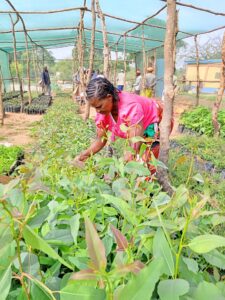
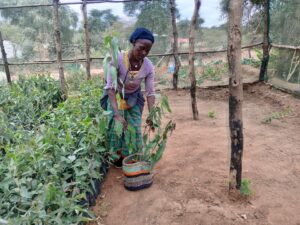
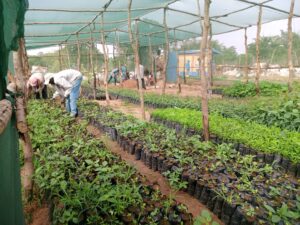
Over 201,000 tree seedlings have been planted across Machakos County through food-for-work and community mobilisation programmes. Community-managed nurseries produce a range of tree seedlings (indigenous and fruit tree species), providing shade, windbreaks, soil stabilisation, fuel wood and nutritional benefits while restoring degraded land.
Community groups have constructed terraces across hillside farmlands in project areas, dramatically reducing soil erosion, improving water infiltration and increasing the productivity of previously degraded slopes. This work is carried out through food-for-assets programmes that provide immediate benefit to participating households.
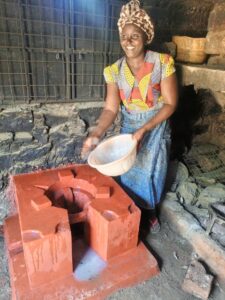
Besides training communites on environmental conservation NACODEV has been working with community groups in constructing affordable energy saving and improved cook stoves. Community members have been learning the art of constructing the cook stoves. This initiative has reduced household dependence on firewood, reducing deforestation pressure causing a significant health benefit for women and children who spend the most time cooking.
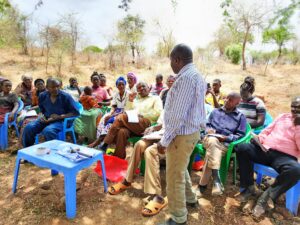
Structured training programmes, farmer field schools and exchange visits equip community members with practical skills in conservation agriculture, agroforestry and climate adaptation. NACODEV facilitates linkages with line ministries and research institutes, other technical partners to ensure training reflects current research and local conditions.
Comprehensive land rehabilitation combines tree planting, terracing, vegetation protection and compost to restore land productivity. Communities are trained to monitor and protect rehabilitated areas, building a culture of environmental stewardship that passes across generations.
"When the trees came back, so did the birds — and slowly, so did the rains. We did not understand before how connected everything was."
— Community Member, Mwala Sub-CountyImpact
The planting of 201,000+ tree seedlings and construction of terraces at county level has visibly reduced soil erosion and improved water retention across rehabilitated farmlands. Communities participating in food-for-work and asset for work; NACODEV approaches have received immediate support while building lasting environmental conservation. The integration of agroforestry with water harvesting and farming programmes creates a reinforcing cycle: more trees mean better water retention, better water retention supports more productive farming, and more productive farms support greater investment in tree planting.